






Li-Ion Batteries and Battery-Powered Tools
Sort by:
72 Products found


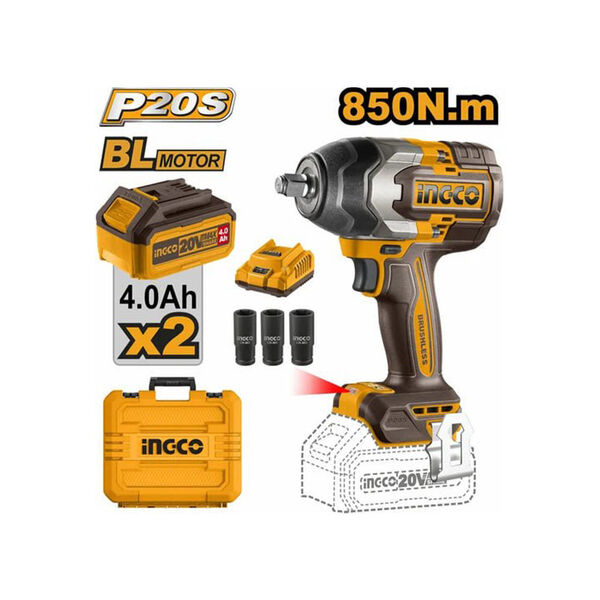


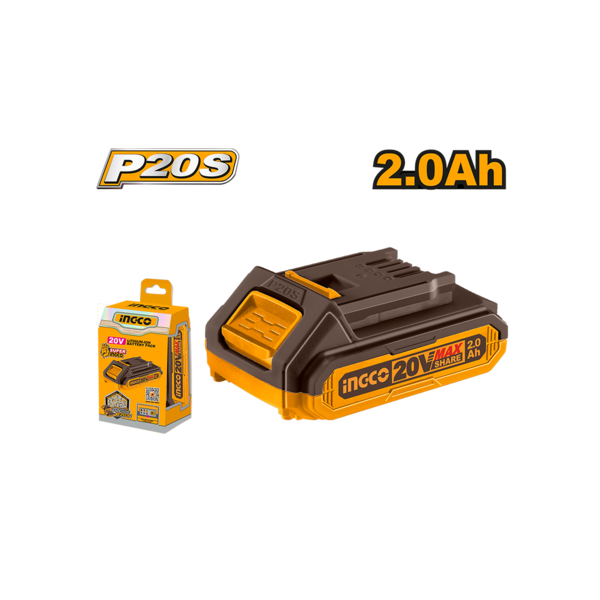


When choosing a battery-powered tool, the first distinction is not simply the type of equipment. It is important to consider the voltage system the tool uses, the battery capacity it requires, and how often it will need to be recharged. The INGCO category includes 12V, 16V, 20V and 42V Li-Ion batteries, chargers, and different types of compatible tools, allowing the choice to be matched to workload and operating time.
Choosing the Right Voltage: 12V, 16V, 20V and 42V
Voltage is one of the key factors when choosing a battery because each tool requires a compatible power system. Alongside genuine 12V battery models, the category also includes 16V, 20V and 42V options. For this reason, battery capacity alone is not enough when buying batteries. Voltage and system compatibility with the specific tool should be checked first.
Different voltage systems are used across tools designed for different jobs. Drills and drivers, rotary hammers, angle grinders and impact wrenches are part of this category, while for automotive work, suitable automotive sockets and accessories are used with an electric impact wrench for working with different types of fasteners.
Rechargeable Batteries and Capacity Options
Rechargeable batteries differ not only in voltage but also in capacity. For the 20V system, the category includes 2Ah, 4Ah and 5Ah options, while the 42V range includes 2Ah and 2.5Ah models. Higher capacity is associated with longer operating time per charge, although the requirements of the compatible tool still need to be checked separately.
Battery-powered garden equipment in the category includes pruning shears, chainsaws and grass trimmers. Manual pruning shears and scissors are intended for a different type of work and may serve as either an addition or an alternative to an electric model depending on the task.
Cordless Tools for Demanding Jobs
The category brings together batteries, chargers and the tools that use them. These include drills and drivers, circular and jigsaws, rotary hammers, angle grinders, staplers and garden equipment. This grouping helps determine whether a particular job requires only an additional battery or a complete set with a charger and tool.
When a job extends beyond a single category, different power tools and hand tools are grouped separately according to their purpose. For battery-powered models, the main specifications to compare are tool voltage, battery capacity and the compatible charger.
Matching the Charger to the Work Routine
A battery cannot form a complete working system without a charger. The category includes standard, fast and dual-port chargers, as well as battery and charger sets. When several batteries are used throughout the day, managing charging becomes just as practical a consideration as choosing the tool itself.
For garden work, battery-powered equipment differs from petrol-powered tools in its power source. The suitable type therefore depends on the scale of the work area, the need for mobility and the expected duration of use.
Where Cable-Free Equipment Is Most Practical
Battery-powered tools are practical where a power cable would restrict movement or where the work area changes frequently. In this category, the same principle applies to both repair tools and selected garden equipment. Corded power tools form a separate category and may be more suitable for jobs where a continuous power source is readily available.
The three most important factors in the final choice are tool voltage, compatible battery capacity and charger type. Comparing these specifications in advance reduces the risk of purchasing incompatible components and makes it easier to determine when an additional battery is enough and when a complete working system is required.