






Laser Measures / Laser Distance Meters
Sort by:
3 Products found


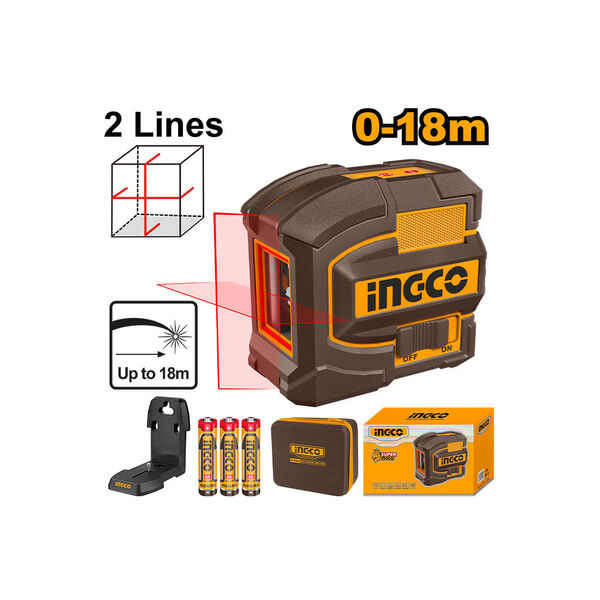

Wall finishing, furniture installation, and interior construction often require straight reference lines to be established across multiple surfaces. If reference marks are positioned at different heights or are unevenly aligned, errors can affect subsequent work. In such cases, a laser measuring tool is used to establish horizontal and vertical lines, helping ensure accurate positioning of components.
INGCO offers laser measuring tools designed for construction, renovation, and installation work. The category includes self-leveling devices that project laser lines onto work surfaces. They are particularly useful when several elements need to be installed at the same height or positioned accurately in relation to one another.
Laser Measuring Tools for Wall and Structural Alignment
When installing shelves, cabinets, and other wall-mounted elements, their positions must be determined in advance. Laser lines help check multiple reference points simultaneously, which is especially useful when working across long surfaces. A conventional spirit level is used to check the alignment of individual components, while a laser device can project a reference line across a longer section.
Laser Distance Measurement and Working Range
When selecting a device, it is important to consider the distance over which the laser line needs to remain visible and the conditions in which the work will take place. The working range determines the device's scope of use, while lighting conditions also affect line visibility. A laser distance meter is used to obtain numerical distance measurements, whereas models designed to project laser lines are intended for surface alignment.
For direct distance measurements, measuring tapes remain a practical option, particularly when working with smaller components. The distinction between distance measurement and line projection is important, as not all laser devices display numerical distance measurements.
Self-Leveling Function and Device Positioning
A self-leveling mechanism automatically aligns the projected laser lines within the device's permitted tilt range. If the instrument is placed on a surface that exceeds this range, accurate projection may not be possible. It is therefore important to position the device on a stable base and check that the self-leveling process is complete.
Establishing initial reference marks before starting work is still necessary. Hand measuring instruments are used for this purpose, after which the projected laser lines can be checked against the marked points. This is particularly important when several structural components need to be installed at the same height.
Laser Line Visibility in Different Working Conditions
The visibility of red and green laser beams varies depending on lighting conditions. Green laser lines may be easier to see in certain environments, although strong lighting can make both colors difficult to distinguish. When selecting a device, the lighting conditions of the workspace and the distance to the target surface should be considered.
Every measuring tool should be selected according to the requirements of the task. For laser devices, additional considerations include beam direction, the number of projected lines, and the mounting method. Direct exposure of the eyes to the laser beam must be avoided.
Measurement Accuracy and Work Planning
When using laser equipment, measurement accuracy depends on the device's position, mounting stability, and the condition of the work surface. If the instrument moves during operation, previously marked points may no longer align with the new projection. In such cases, the projected lines need to be checked again against the original reference marks.
The INGCO range includes tools and equipment for various construction and installation tasks. When choosing a laser device, the key consideration is how well its functions match the scale and requirements of the work. Clearly established reference marks and properly positioned equipment help reduce the risk of alignment errors being discovered at a later stage of installation.